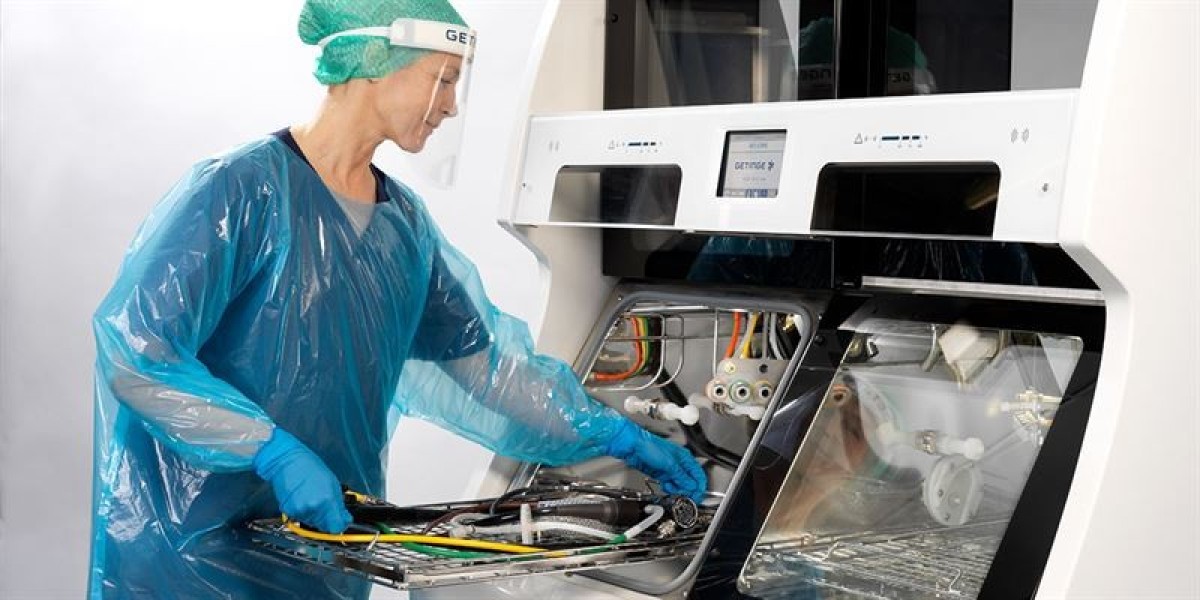

The global endoscope washer disinfector market is witnessing steady growth as healthcare facilities increasingly prioritize infection prevention, patient safety, and efficient medical instrument reprocessing. Automated washer-disinfector systems are becoming essential components of modern endoscopy departments, helping hospitals maintain consistent cleaning standards while improving operational efficiency and regulatory compliance. The global market was valued at USD 517.60 million in 2025 and is projected to expand at a CAGR of 6.8% during the forecast period.
Growing awareness of healthcare-associated infections, increasing endoscopic procedure volumes, and the adoption of automated reprocessing technologies are creating new opportunities for manufacturers. Hospitals and ambulatory surgical centers are gradually moving away from traditional manual cleaning procedures towards validated automated systems that offer improved process consistency, traceability, and documentation.
Increasing Adoption of Automated Endoscope Reprocessing Systems
One of the major factors supporting market growth is the increasing adoption of automated endoscope washer-disinfectors in hospital central sterile services departments (CSSDs) and specialised endoscopy facilities. Manual endoscope cleaning involves several time-consuming steps, including brushing, flushing, rinsing, and high-level disinfection. These activities require trained personnel and careful handling of chemical disinfectants.
Automated washer-disinfectors help standardise these procedures by integrating multiple cleaning and disinfection stages into controlled cycles. Systems designed around ISO 15883 requirements support validated processing conditions, cycle monitoring, and electronic documentation. This enables healthcare facilities to improve workflow consistency while reducing the possibility of human error during reprocessing.
Manufacturers are also introducing equipment with improved water consumption, chemical management, and processing efficiency. For example, Olympus introduced its ETD Endoscope Washer Disinfector in Basic and Premium versions in June 2023, incorporating peracetic acid-based chemistry and features intended to improve endoscope reprocessing efficiency.
These technological developments are encouraging healthcare providers to invest in modern automated systems, particularly in facilities handling large numbers of gastrointestinal, respiratory, and urological endoscopic procedures.
Explore detailed market statistics, competitive developments, regional opportunities, and future growth projections:
https://www.clarivanthealth.com/report/endoscope-washer-disinfector
Digital Traceability and Compliance Strengthen Market Demand
Digital documentation and endoscope tracking are becoming increasingly important in healthcare facilities. Hospitals must maintain accurate records of cleaning and high-level disinfection cycles to support infection prevention programmes, quality assurance, and regulatory inspections.
Modern washer-disinfector systems increasingly incorporate electronic data logging, barcode identification, RFID technology, and integration with endoscope management platforms. These capabilities allow healthcare professionals to associate individual endoscopes with their respective cleaning and disinfection records.
RFID-enabled tracking is particularly valuable because it improves visibility throughout the reprocessing workflow. Healthcare facilities can identify which endoscope has undergone a particular disinfection cycle, review processing information, and maintain more organised documentation.
Companies are responding to this demand through connected reprocessing solutions. Olympus, for example, offers Hytrack integration to support endoscope identification and reprocessing traceability. STERIS has also expanded its endoscope processing capabilities through investments in drying and storage solutions.
As infection control standards and documentation expectations continue to evolve, digital connectivity is expected to remain an important purchasing consideration for hospitals and specialised endoscopy centres.
Strategic Partnerships and Acquisitions Reshape Competition
The competitive landscape is evolving as manufacturers seek to strengthen their product portfolios through acquisitions, partnerships, and integrated healthcare equipment solutions.
In November 2023, HOYA Corporation completed the acquisition of the remaining stake in Wassenburg Medical, becoming its sole shareholder. The transaction strengthened the company's position in endoscope reprocessing equipment and created opportunities to combine Wassenburg's washer-disinfector technologies with HOYA's Pentax Medical endoscopy portfolio.
Another important development occurred in June 2024, when Metall Zug and Miele finalised their joint venture, establishing SteelcoBelimed. The collaboration combines Steelco's manufacturing capabilities with Belimed's expertise in sterilisation and infection control technologies.
These developments demonstrate how manufacturers are moving towards broader healthcare equipment portfolios. Hospitals increasingly value suppliers that can provide compatible endoscopes, automated reprocessing equipment, technical support, and maintenance services through integrated commercial relationships.
This trend is also intensifying competition among established companies, including Olympus Corporation, STERIS plc, Getinge AB, HOYA Corporation, SteelcoBelimed, and Custom Ultrasonics.
Growing Demand from Hospitals and Ambulatory Surgical Centres
Hospitals currently represent an important end-use segment in the endoscope washer disinfector market. Large healthcare institutions perform a considerable number of endoscopic procedures across gastroenterology, pulmonology, and urology departments.
These facilities require reliable reprocessing infrastructure capable of handling multiple endoscopes while maintaining consistent disinfection standards. Multi-chamber washer-disinfectors are particularly suitable for high-volume healthcare environments because they support parallel processing and improve equipment utilisation.
Ambulatory surgical centres (ASCs) are also emerging as important growth contributors. The increasing migration of outpatient gastrointestinal procedures towards specialised surgical facilities is creating demand for compact and cost-effective automated reprocessing systems.
Single-chamber washer-disinfectors are attractive for smaller facilities because they provide automated processing capabilities without requiring the larger capital investment associated with high-throughput multi-chamber installations.
Manufacturers developing flexible equipment configurations, compact designs, and user-friendly digital interfaces are therefore positioned to benefit from expanding demand across different healthcare settings.
Discover additional healthcare industry research, market intelligence, and emerging medical technology trends:
https://www.clarivanthealth.com/
Regional Market Developments and Growth Opportunities
North America accounted for the largest revenue share of the global endoscope washer disinfector market in 2025. The region benefits from established healthcare infrastructure, growing awareness of infection prevention, and increasing adoption of advanced medical equipment.
The United States remains a major contributor because hospitals and endoscopy centers continue investing in automated reprocessing technologies and digital compliance solutions. The presence of established manufacturers, including STERIS and Olympus, further supports regional market development.
Europe is expected to register the fastest revenue growth during the forecast period. Countries such as Germany, the United Kingdom, France, and Scandinavian nations are supporting demand through investments in hospital infrastructure, infection control practices, and automated medical equipment.
The SteelcoBelimed joint venture and HOYA's acquisition of Wassenburg Medical also strengthen the competitive position of European manufacturers.
Asia Pacific represents another promising market, supported by expanding healthcare infrastructure, increasing endoscopic procedure volumes, and improvements in hospital infection control practices. Japan, China, South Korea, and Australia are among the important regional markets.
Meanwhile, Latin America and the Middle East and Africa are expected to experience gradual market development as healthcare providers increase investments in specialized medical equipment and modern endoscopy facilities.
High Equipment Costs Remain a Market Challenge
Despite favorable growth prospects, high initial equipment costs remain a significant challenge for the market. Advanced automated washer-disinfector installations can require substantial capital expenditure, particularly for multi-chamber systems with integrated tracking and documentation capabilities.
Smaller hospitals, community healthcare facilities, and outpatient gastrointestinal centers may find it difficult to justify these investments when procedure volumes are relatively low.
Another emerging challenge is the growing adoption of single-use endoscopes in selected clinical applications, including bronchoscopy and ureteroscopy. As healthcare providers increasingly consider disposable alternatives, the demand for reprocessing equipment may decline in departments that transition entirely to single-use devices.
Long equipment replacement cycles also influence purchasing decisions. Hospitals with recently installed washer-disinfector systems may postpone upgrades, even when newer models offer improved automation and digital tracking capabilities.
Manufacturers will therefore need to balance technological innovation with affordability, operational efficiency, and long-term service support.