
The fertilizers market is closely linked to the development of agricultural practices that aim to improve crop production while using resources more carefully. Farmers operate across a wide range of environments, where soil fertility, rainfall, irrigation access, and crop varieties influence nutrient requirements. Fertilizers provide a way to supplement soil nutrients and support plant growth, but their effectiveness depends on appropriate selection and application. As agricultural management becomes more data-oriented, the relationship between fertilizers and precision farming is receiving greater attention.
The growing adoption of precision agriculture nutrient management reflects an effort to match fertilizer applications with the specific needs of crops and fields. Instead of applying the same treatment everywhere, precision farming uses available information to identify variations in soil conditions and plant development. This approach can help farmers make more informed decisions about nutrient placement, application timing, and product selection while considering the practical requirements of their operations.
Moving Beyond Uniform Fertilizer Application
Agricultural fields are rarely uniform in every respect. Soil texture, organic matter, moisture retention, drainage, and nutrient availability can differ within the same farm. These differences affect how crops grow and how effectively applied nutrients are used.
Uniform fertilizer application may not address these variations adequately. Some parts of a field may require additional nutrients, while others may already contain sufficient amounts. Precision farming aims to account for these differences through soil sampling, field mapping, crop observation, and application technologies.
The resulting information can help farmers develop more suitable nutrient plans. However, the quality of the decisions depends on representative sampling, reliable data, and correct interpretation. Precision farming should therefore be viewed as a management approach rather than a substitute for agronomic knowledge.
Soil Mapping and Crop Monitoring
Soil mapping can help agricultural producers understand differences in field characteristics. By organizing soil test results and other field information geographically, farmers can identify areas that may require different management practices.
Crop monitoring adds another layer of information. Observations of plant color, growth patterns, and crop development can reveal potential nutrient deficiencies or other problems. Remote sensing technologies may help identify areas that differ from surrounding parts of a field, although these differences do not always indicate a nutrient issue.
Water stress, pests, diseases, and soil conditions can also influence plant appearance. Farmers must evaluate these possibilities before deciding whether fertilizer application is the appropriate response. Combining soil analysis with crop observations can support more reliable decisions.
Variable-Rate Fertilizer Application
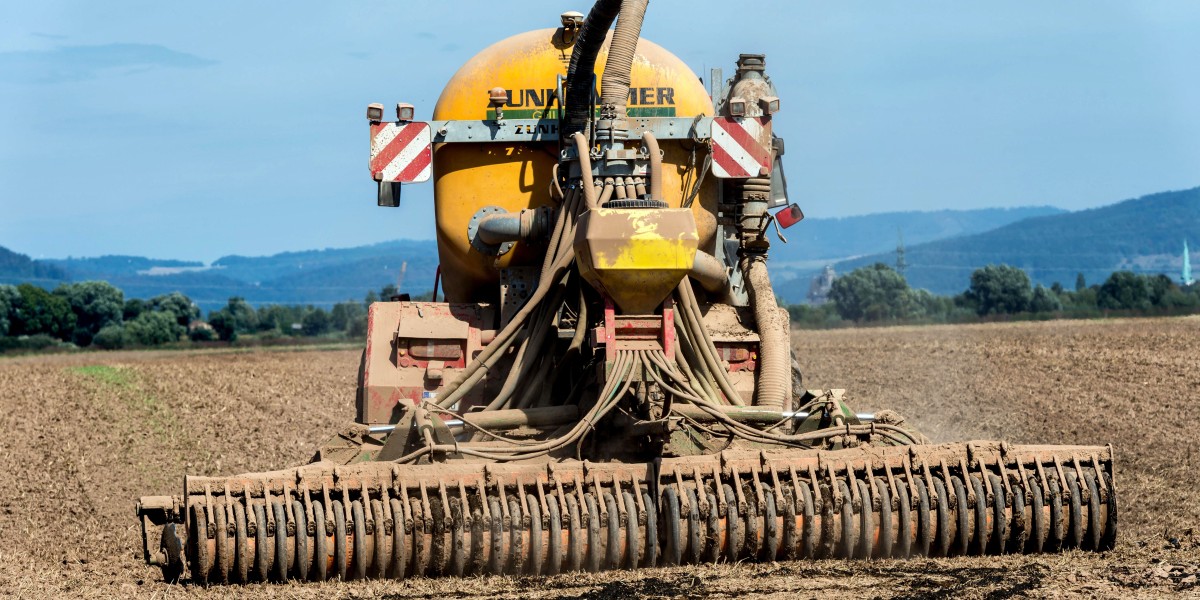
Variable-rate technology allows compatible agricultural equipment to adjust fertilizer delivery across a field. Depending on the system, application rates can be guided by field maps, sensor readings, or other management information.
This method can help address differences in nutrient requirements and reduce unnecessary applications where nutrients are already adequate. It may also support more targeted input management in large or complex farming operations.
However, implementation requires suitable equipment, accurate information, maintenance, and operator training. The costs and practical benefits will vary depending on farm size, crop type, field characteristics, and available technology.
For some farmers, conventional application supported by good soil testing and sound timing may remain the most practical option. Precision farming approaches should be selected according to actual agricultural needs rather than adopted simply because the technology is available.
Connecting Fertilizers With Irrigation Management
Fertigation integrates fertilizer delivery with irrigation systems, allowing suitable nutrients to be supplied through irrigation water. This method can be useful where crops are cultivated under managed irrigation and the required equipment is available.
Fertigation requires attention to fertilizer solubility, water quality, nutrient compatibility, irrigation scheduling, and equipment maintenance. Poorly managed systems can create operational difficulties or lead to uneven nutrient distribution.
When properly planned, fertigation can give farmers greater flexibility in coordinating nutrient supply with crop growth. It also demonstrates how fertilizer management increasingly depends on the integration of products, equipment, and farm-level decisions.
Sustainability and Operational Efficiency
Precision farming can contribute to more responsible fertilizer management by helping farmers identify where nutrients are needed and when applications are appropriate. Improved targeting may reduce avoidable fertilizer use and associated nutrient losses.
Nevertheless, outcomes depend on the quality of management and the suitability of the selected technology. Accurate soil tests, appropriate fertilizer recommendations, and regular evaluation remain necessary.
Manufacturers can support these practices by providing products compatible with different application systems, clear instructions, and useful technical information. Distributors and agricultural advisers also play a role in helping farmers understand available options.
Future Outlook
The connection between fertilizers and precision farming is expected to remain important as agricultural producers seek more informed ways to manage inputs. Digital tools, application equipment, and specialized fertilizer products can complement one another when integrated appropriately.
The fertilizers market will continue serving both technology-intensive farms and operations that rely on traditional methods. Its future development will depend on offering practical crop nutrition solutions that reflect diverse agricultural needs while encouraging responsible resource use.
FAQs
Q1. What is precision fertilizer application?
It is an approach that uses field information, soil analysis, sensors, or specialized equipment to match fertilizer applications more closely with crop and soil requirements.
Q2. Can precision farming eliminate fertilizer waste?
Precision farming may help reduce unnecessary applications, but it cannot eliminate every source of nutrient loss. Effective results depend on reliable data, suitable products, and proper agricultural management.