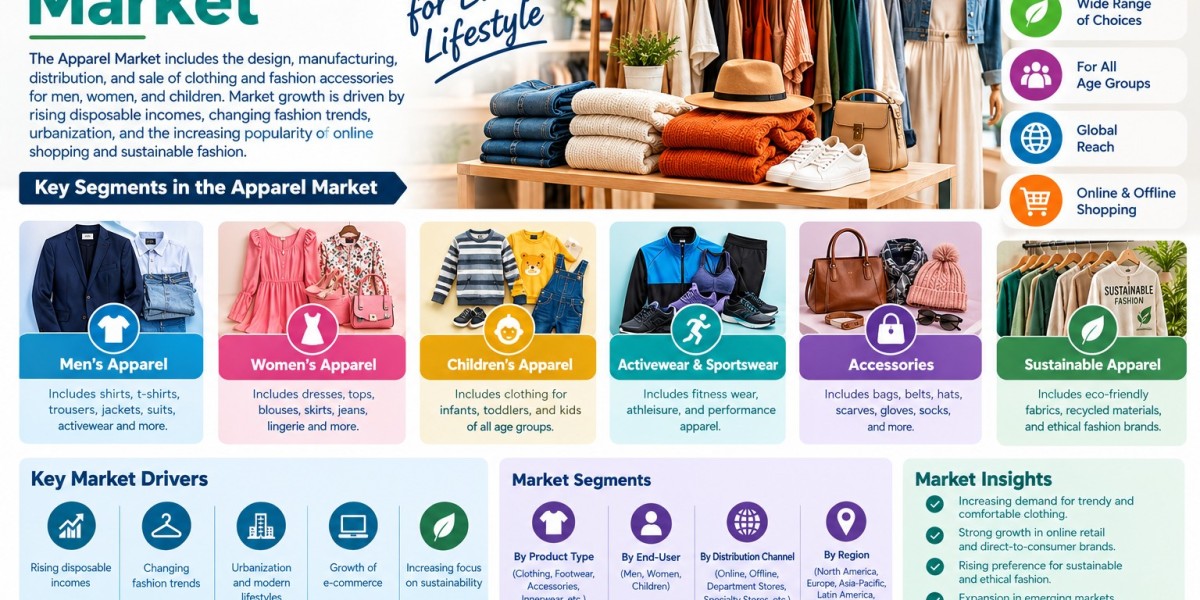

The apparel market continues to evolve as fashion becomes increasingly connected with lifestyle, comfort, self-expression, and changing consumer expectations. Clothing is no longer viewed only as a basic necessity. Modern consumers often consider apparel an extension of their personality, daily routine, social identity, and individual preferences. This changing perception is encouraging brands to rethink how they design, produce, present, and distribute clothing. From everyday casualwear to formal clothing, activewear, outerwear, and fashion accessories, the apparel industry continues to adapt to a broad range of needs. The market is also becoming more diverse as consumers seek products that balance appearance, functionality, comfort, and practicality.
One of the important themes influencing the industry is the growing interest in sustainable fashion trends. Sustainability is becoming increasingly connected with how consumers evaluate clothing products and brands. Shoppers may pay greater attention to the materials used in garments, manufacturing practices, product durability, and the overall environmental approach of a brand. This is encouraging apparel businesses to explore responsible sourcing, longer-lasting garments, recycled materials, and production methods designed to reduce unnecessary waste. Sustainability is therefore becoming more than a specialized fashion concept and is gradually influencing everyday clothing choices.
Comfort is another major consideration shaping apparel preferences. Consumers increasingly expect clothing to fit naturally into different parts of their daily lives. A single garment may be expected to provide comfort at home, during travel, at work, or during social activities. This has encouraged brands to develop designs that combine practical construction with attractive styling. Soft fabrics, flexible silhouettes, breathable materials, and adaptable designs are becoming important elements in modern clothing development.
The relationship between fashion and functionality is also becoming stronger. Active lifestyles have encouraged demand for apparel that can support movement while maintaining a fashionable appearance. Activewear and athleisure demonstrate how sports-inspired clothing can move beyond exercise settings and become part of everyday wardrobes. Consumers may choose clothing based on its ability to provide flexibility, comfort, durability, and style at the same time. This blending of performance and lifestyle fashion is creating new possibilities for apparel designers.
Digital transformation is also reshaping how consumers discover and purchase clothing. Online stores, mobile shopping experiences, social platforms, and digital brand communities have made fashion discovery more interactive. Consumers can explore collections, compare designs, review product information, and engage with brands without relying exclusively on physical stores. Digital platforms also allow apparel businesses to introduce collections quickly and communicate directly with their audiences.
Personalization is another area gaining importance. Consumers increasingly appreciate clothing that reflects their preferences, personality, and individual style. Apparel brands are responding through customized designs, varied product selections, personalized recommendations, and flexible styling options. The ability to create a stronger connection between a consumer and a product can help brands develop meaningful relationships and encourage repeat engagement.
Inclusivity is also becoming an important part of apparel development. Consumers represent different body shapes, lifestyles, ages, preferences, and identities. Apparel businesses are increasingly considering broader sizing, adaptable designs, and diverse representation in marketing. Inclusive fashion can help make clothing more accessible while allowing brands to connect with a wider audience.
The apparel market is also influenced by changing seasonal preferences. Consumers may seek lightweight clothing during warmer periods and layered, insulated, or protective garments during colder conditions. Fashion cycles continue to influence colors, patterns, silhouettes, and styling choices, while everyday consumers increasingly combine seasonal trends with personal preferences.
Another notable development is the growing relationship between apparel and technology. Digital design tools, intelligent inventory systems, virtual shopping experiences, and advanced manufacturing processes can help companies respond more efficiently to changing demand. Technology can also support experimentation with new materials, garment construction, and customer experiences.
Looking ahead, the apparel market is likely to remain highly responsive to changing consumer expectations. Sustainability, comfort, functionality, personalization, digital shopping, and inclusive design are creating interconnected opportunities for brands. Companies that understand how these factors influence modern wardrobes can develop products that better match everyday lifestyles. The future of apparel will therefore be shaped not only by fashion cycles but also by how effectively brands combine creativity, practicality, responsibility, and consumer engagement.
FAQs
1. What factors are influencing the apparel market?
Changing fashion preferences, comfort requirements, sustainability awareness, digital shopping, personalization, functionality, and inclusive design are important influences on the apparel market.
2. Why is sustainability becoming important in apparel?
Sustainability is becoming important because consumers and brands are paying greater attention to responsible materials, production practices, product durability, and waste reduction.