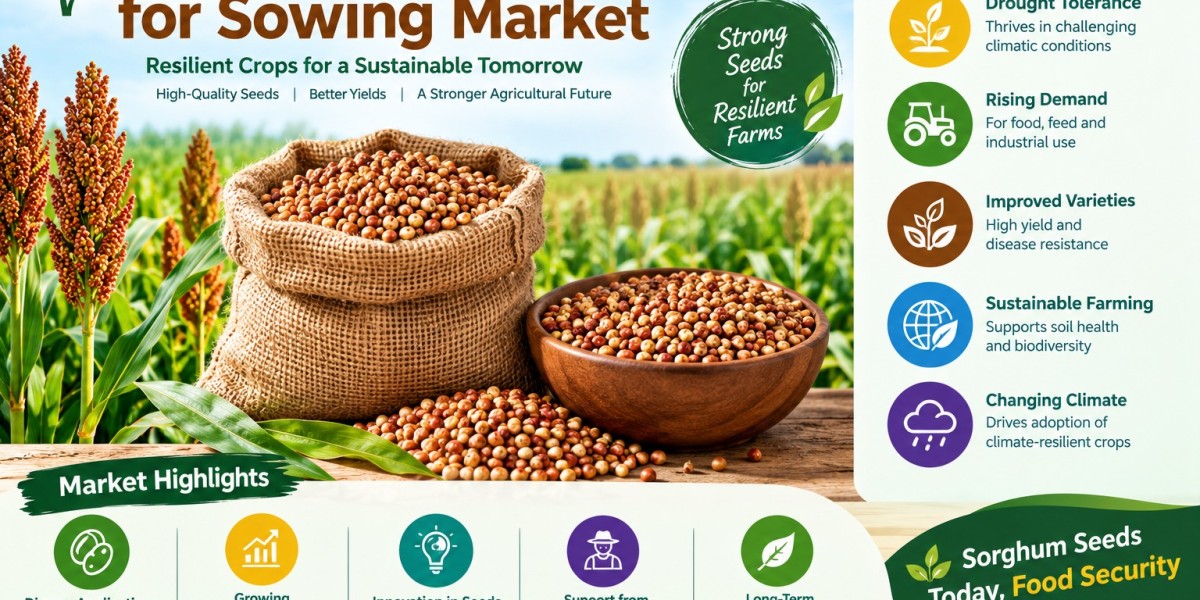

The Sorghum Seeds for Sowing Market is evolving alongside broader changes in agricultural practices. Farmers are increasingly paying attention to planting decisions because seed selection can influence the early stages of crop cultivation. Sorghum seeds are used as the foundation for establishing sorghum crops, and their suitability can depend on the farming environment, cultivation objectives, and management practices used by growers.
Interest in sorghum crop seed selection reflects the growing focus on making thoughtful planting decisions. Farmers may look at seed characteristics, field requirements, sowing techniques, and expected crop performance when evaluating available options. Selecting seeds that fit the farming environment can make it easier to develop a coordinated cultivation plan from field preparation through crop management.
Agricultural production is influenced by many environmental factors. Soil structure, weather patterns, moisture availability, and field conditions can vary from one location to another. Because of this variation, a single approach to seed selection may not meet every farming requirement. The availability of different sorghum seed options allows agricultural producers to consider planting material according to their individual circumstances.
Seed innovation is an important area of development within the industry. Agricultural research and seed development can focus on improving characteristics that are relevant to farmers. Producers may explore ways to create seed products that provide consistency and suitability for different cultivation environments. This continuing focus on innovation can contribute to a more diverse and responsive seed market.
Another major trend is the growing use of organized farm-management practices. Farmers are increasingly connecting seed selection with other decisions such as field preparation, planting timing, irrigation planning, weed management, and harvesting. Instead of viewing seeds as an isolated agricultural input, growers can consider them as part of a complete crop-production system.
The role of information is also becoming more important. Farmers need clear and useful information when choosing planting material. Product descriptions, seed characteristics, handling instructions, and cultivation recommendations can help growers understand whether a particular seed option fits their needs. Agricultural suppliers that provide understandable information can help make the seed-selection process more efficient.
Sustainability continues to influence agricultural decision-making. Farmers are exploring ways to use resources more carefully and organize cultivation around the conditions of their land. Sorghum seed selection can be included within this approach. Choosing planting material according to environmental conditions and farm-management capabilities can support more coordinated agricultural practices.
Digital platforms are creating new ways for seed companies to communicate with growers. Farmers can increasingly research agricultural products online, compare general characteristics, and connect with suppliers through digital channels. For seed businesses, these platforms create opportunities to improve communication and provide educational material related to planting and cultivation.
Distribution is another factor shaping the market. Seeds need to reach farmers at the appropriate stage of their cultivation planning. Reliable distribution networks can support access to planting material across agricultural regions. Retailers, wholesalers, agricultural suppliers, and seed producers can work together to improve product availability and provide farmers with relevant information.
Sorghum also has relevance within crop diversification strategies. Farmers may consider sorghum as part of broader crop-planning decisions based on their agricultural goals. Crop diversification can help growers organize their farming activities around different production needs, market opportunities, and field-management considerations.
The Sorghum Seeds for Sowing Market therefore represents an important part of the agricultural supply chain. Its development is connected with seed innovation, farmer preferences, technology, distribution, sustainability, and modern crop-management practices. As agriculture continues to become more information-driven and focused on efficient planning, the role of suitable sorghum seeds is likely to remain significant for growers seeking practical planting solutions.
FAQs
FAQ 1: Why are sorghum seeds important in modern agriculture?
Sorghum seeds provide the planting material required to establish sorghum crops and can be selected according to farming conditions, crop objectives, and cultivation practices.
FAQ 2: What role does sustainability play in sorghum seed selection?
Sustainability can encourage farmers to select planting material that fits their growing environment and farming capabilities while supporting responsible use of agricultural resources.