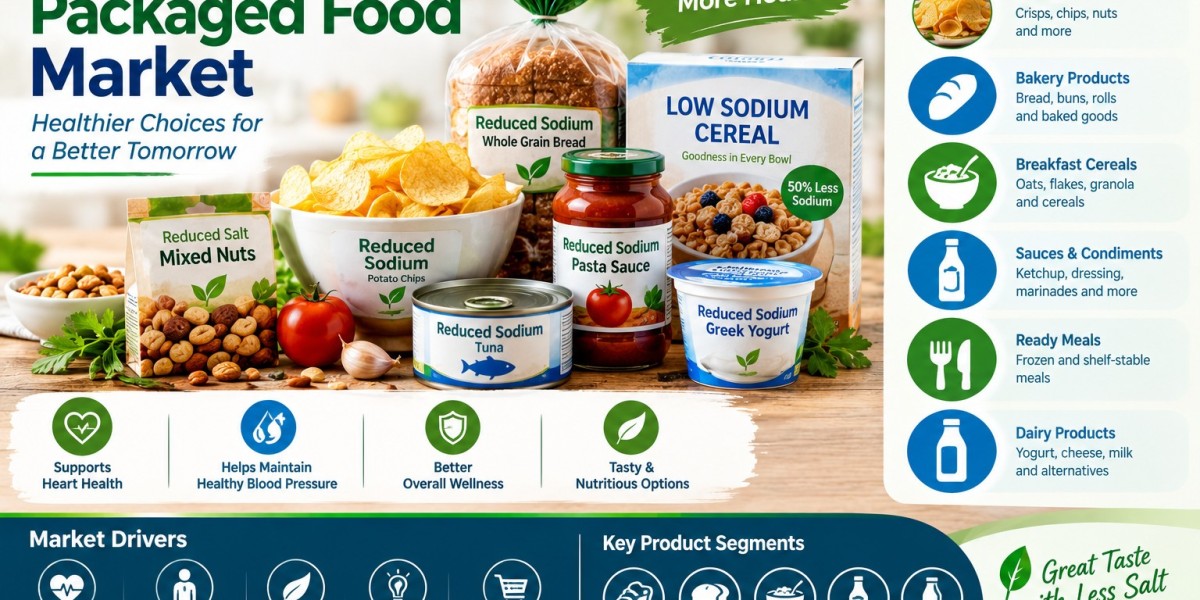

The Reduced Salt Packaged Food Market is reflecting a significant change in how modern consumers approach packaged food. Convenience remains a major reason people choose packaged products, but health and wellness considerations are becoming increasingly important in purchasing decisions. This has created an opportunity for manufacturers to develop products that combine practical everyday use with reduced salt formulations. As consumers become more interested in ingredient awareness and balanced food choices, reduced salt products are gaining relevance across different areas of the packaged food industry.
The growing demand for low salt packaged food options is encouraging manufacturers to explore new product concepts and reformulate existing offerings. The opportunity extends across snacks, sauces, dairy products, frozen foods, canned products, and other packaged categories. A broad product range can make reduced salt choices easier to incorporate into everyday meals and snacks while allowing consumers to maintain familiar shopping habits.
One of the strongest opportunities for the market comes from changing consumer expectations. Shoppers increasingly want to know what they are purchasing and why a particular product may fit their lifestyle. This has increased the importance of clear product communication. Packaging, online descriptions, ingredient information, and promotional content can all help consumers understand a product's characteristics.
Taste remains a central consideration in this process. Consumers may be interested in healthier products, but they still expect satisfying flavor. Manufacturers therefore need to approach salt reduction as a product-development challenge rather than simply an ingredient-reduction exercise. Combining herbs, spices, natural flavor components, aromatics, and different textures can help create more complex sensory experiences.
Innovation can also take place through product formats. Modern consumers often prefer foods that are easy to store, open, prepare, and consume. Resealable packaging, convenient portions, ready-to-use ingredients, and quick preparation formats can make reduced salt products more practical. When nutritional positioning is combined with convenience, products may appeal to a wider range of consumers.
Online retail is another important opportunity. Digital grocery platforms allow consumers to search for specific product characteristics and compare multiple choices. Manufacturers can use digital product pages to provide detailed information, cooking suggestions, serving ideas, and ingredient explanations. This can create a stronger connection between consumers and brands while making specialized product choices easier to find.
Content marketing can support this digital environment. Recipes and meal ideas can demonstrate how reduced salt products can be incorporated into familiar dishes. Educational content can explain ingredient choices in simple language. Product demonstrations can show convenience and preparation methods. These approaches can help shift the perception of reduced salt products from restrictive alternatives toward practical everyday foods.
Retailers can also influence adoption by improving product visibility. Reduced salt products can be displayed alongside conventional options or organized within health-oriented categories. Online stores can provide filtering options that make product discovery more efficient. Better accessibility can encourage consumers to experiment with products they might not otherwise notice.
Another opportunity is the development of products for different consumption occasions. Consumers may want reduced salt snacks during work breaks, convenient meal components for busy evenings, or sauces and condiments for home cooking. Manufacturers can design products around these specific situations. Understanding when and why consumers use packaged food can support more relevant product development.
The market may also benefit from innovation among smaller and specialized food companies. Niche brands can build their identity around transparent ingredients, wellness-oriented formulations, unique flavors, and convenient formats. Established companies can use their distribution capabilities to make reduced salt products widely available. Together, these different business models can contribute to a diverse marketplace.
Food service applications provide another potential growth area. Professional kitchens and catering businesses can incorporate reduced salt packaged ingredients into meal preparation. This can help food service providers respond to customers who are increasingly interested in dietary choices. Institutional settings may also consider products that support varied nutritional preferences.
Sustainability can complement the reduced salt trend as consumers increasingly evaluate products from multiple perspectives. Packaging materials, sourcing practices, production methods, and food waste considerations may influence purchasing decisions alongside nutritional characteristics. Manufacturers that approach product development holistically can address several consumer expectations at once.
Looking ahead, the Reduced Salt Packaged Food Market is likely to remain closely linked with broader developments in food innovation and consumer behavior. The future of the category will depend on the ability of manufacturers to create products that are flavorful, convenient, accessible, clearly communicated, and aligned with changing expectations. Reduced salt foods have the potential to become an ordinary part of modern packaged food choices as consumers continue looking for practical ways to make more considered purchasing decisions.
Ultimately, the market represents more than a change in salt content. It reflects an evolving relationship between consumers and packaged food. People increasingly want products that fit their lifestyles while supporting their personal approach to wellness. Manufacturers, retailers, and food service providers can respond by focusing on innovation, variety, transparency, and consumer-friendly product experiences.
FAQs
FAQ 1: What makes reduced salt packaged foods relevant to modern consumers?
They combine the convenience of packaged food with a formulation that can align with consumers who are paying greater attention to balanced eating and ingredient choices.
FAQ 2: What can manufacturers do to make reduced salt products more appealing?
Manufacturers can focus on flavor innovation, convenient formats, clear labeling, attractive packaging, product variety, and practical meal or serving applications.